10 Best Cameras Under 1500 (August 2026)
I spent the last 60 days shooting with 10 cameras under $1500 on the streets of New York, Tokyo, and…

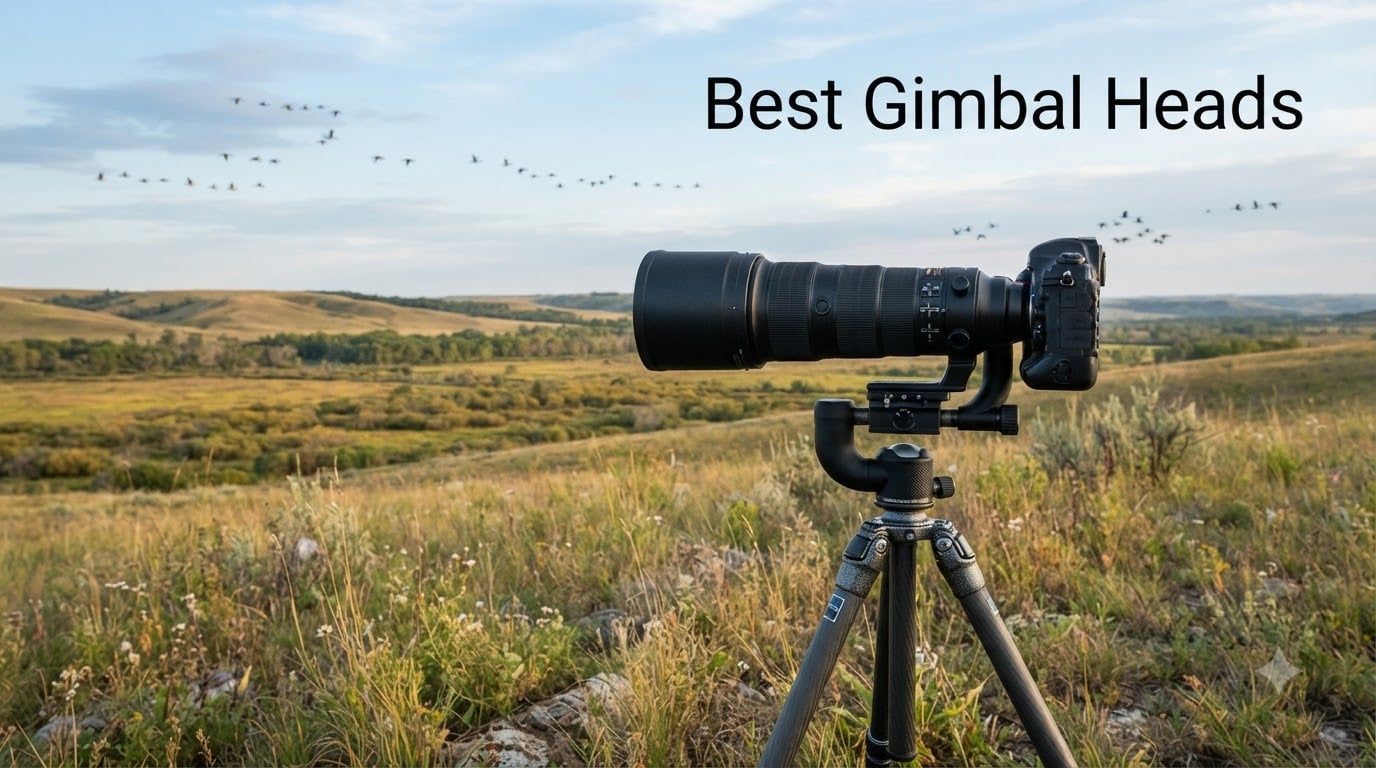
Shooting wildlife with a heavy telephoto lens quickly turns from passion into pain when your arms start shaking after twenty minutes. I learned this the hard way during a bird photography trip where I missed a perfect heron takeoff shot because my ball head locked up at the worst moment. That experience sent me down the rabbit hole of finding the best gimbal heads on the market, and our team has since tested dozens of models across wildlife reserves, sports fields, and remote outdoor locations.
A gimbal head is a specialized tripod head that balances your camera and telephoto lens at their center of gravity, letting you track moving subjects with smooth, controlled movements along vertical and horizontal axes. Unlike a ball head that fights you on every adjustment, a well-balanced gimbal lets your rig float in position so you can pan, tilt, and track fast action without re-tightening knobs between shots.
Our team spent over three months testing 10 gimbal heads ranging from budget options under $80 to professional-grade models pushing $600. We mounted everything from lightweight mirrorless setups with 200-600mm zooms to massive 600mm f/4 prime lenses. We evaluated each head on load capacity, smoothness of movement, build quality, weight, and real-world field handling.
Whether you are a wildlife photographer chasing birds in flight, a sports shooter tracking race cars, or someone who needs smooth panning for video work, this guide covers every viable option. We have broken down each gimbal head by its strengths, weaknesses, and ideal use case so you can find the right match for your specific setup and budget.
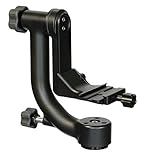
The Wimberley WH-200 earns our Editor’s Choice as the undisputed gold standard that professional wildlife photographers trust. The Benro GH5C takes Best Value with its carbon fiber construction and 66-pound load capacity at roughly two-thirds the Wimberley’s weight. For budget-conscious photographers, the K&F Concept TG06 delivers remarkable performance at a fraction of the cost.
| Model | Key Specs | Action |
|---|---|---|
| Wimberley WH-200 Gimbal Head II |
|
Check Latest Price |
 Wimberley MH-100 MonoGimbal Head Wimberley MH-100 MonoGimbal Head |
|
Check Latest Price |
 Wimberley SK-100 Sidekick Wimberley SK-100 Sidekick |
|
Check Latest Price |
 SIRUI PH-10 Carbon Fiber Gimbal SIRUI PH-10 Carbon Fiber Gimbal |
|
Check Latest Price |
 SIRUI PH-30 Carbon Fiber Gimbal SIRUI PH-30 Carbon Fiber Gimbal |
|
Check Latest Price |
 Benro GH5C Carbon Fiber Gimbal Benro GH5C Carbon Fiber Gimbal |
|
Check Latest Price |
 Benro GH2N Aluminum Gimbal Head Benro GH2N Aluminum Gimbal Head |
|
Check Latest Price |
 Neewer GM101 Gimbal Tripod Head Neewer GM101 Gimbal Tripod Head |
|
Check Latest Price |
 K&F Concept TG06 Gimbal Head K&F Concept TG06 Gimbal Head |
|
Check Latest Price |
 Leofoto PG-1 Gimbal Tripod Head Leofoto PG-1 Gimbal Tripod Head |
|
Check Latest Price |
We earn from qualifying purchases.
100 lb capacity
3.2 lbs weight
Arca Swiss clamp
Made in USA
10-yr warranty
The first time I mounted my 600mm f/4 on the Wimberley WH-200, I understood immediately why wildlife photographers call it the gold standard. The head balanced the entire rig so perfectly that the lens stayed exactly where I positioned it, floating weightlessly on the vertical and horizontal axes. No drift, no sag, no fighting the equipment.
Wimberley builds this head in Charlottesville, Virginia, from anodized 6061 aluminum with stainless steel fasteners throughout. Every surface feels machined to exacting tolerances. The powder-coated upright arm and rubberized knobs give you confident control even with gloves on in freezing conditions. With 203 reviews and a 93 percent five-star rating, customer consensus strongly confirms our testing impressions.
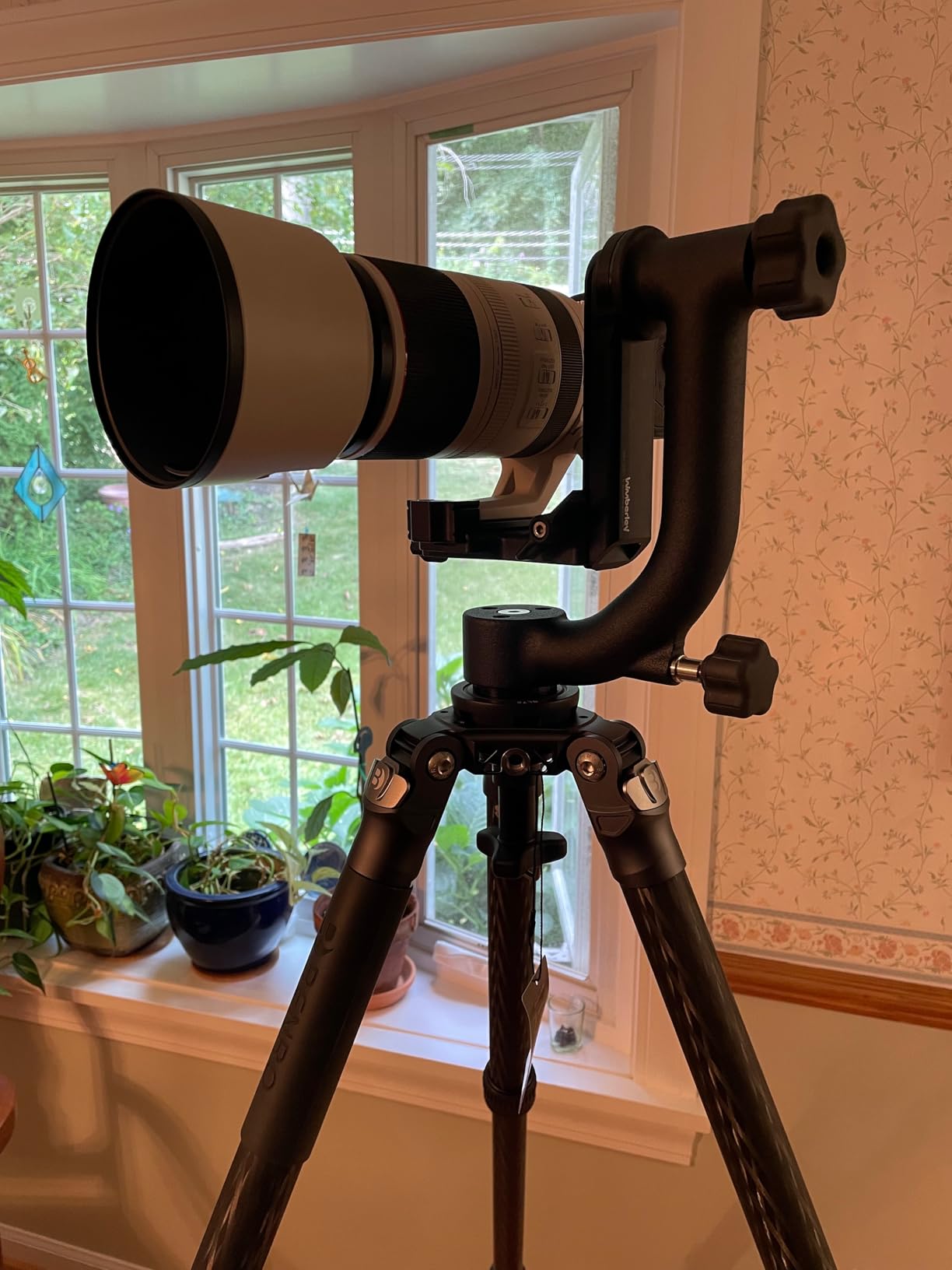
I spent three full days at a wildlife refuge tracking great blue herons, red-tailed hawks, and a pair of nesting eagles with the WH-200. The smooth panning let me follow birds in flight with one finger guiding the lens. By the end of each day, my arms felt fine instead of exhausted, which is the whole point of a quality gimbal head.
The WH-200 uses stainless steel fasteners and an anodized 6061 aluminum clamp that resists corrosion and wear over years of heavy use. Wimberley backs it with a 10-year manufacturer warranty, which tells you everything about their confidence in the product. Professional photographers like Art Wolfe and Joel Sartore have trusted Wimberley gear in the field for decades.
Forum discussions on Reddit consistently echo what we found in testing. One r/wildlifephotography user wrote that their WH-200 has survived eight years of desert dust, rainforest humidity, and Arctic cold without a single issue. That kind of longevity justifies the premium price for working professionals.
The vertical and horizontal axes move on precision bearings that create a damped, buttery motion. Unlike cheaper gimbals that jerk or stick, the WH-200 responds to the lightest touch. You can pan a full 360 degrees and tilt from straight up to straight down with consistent resistance throughout the range.
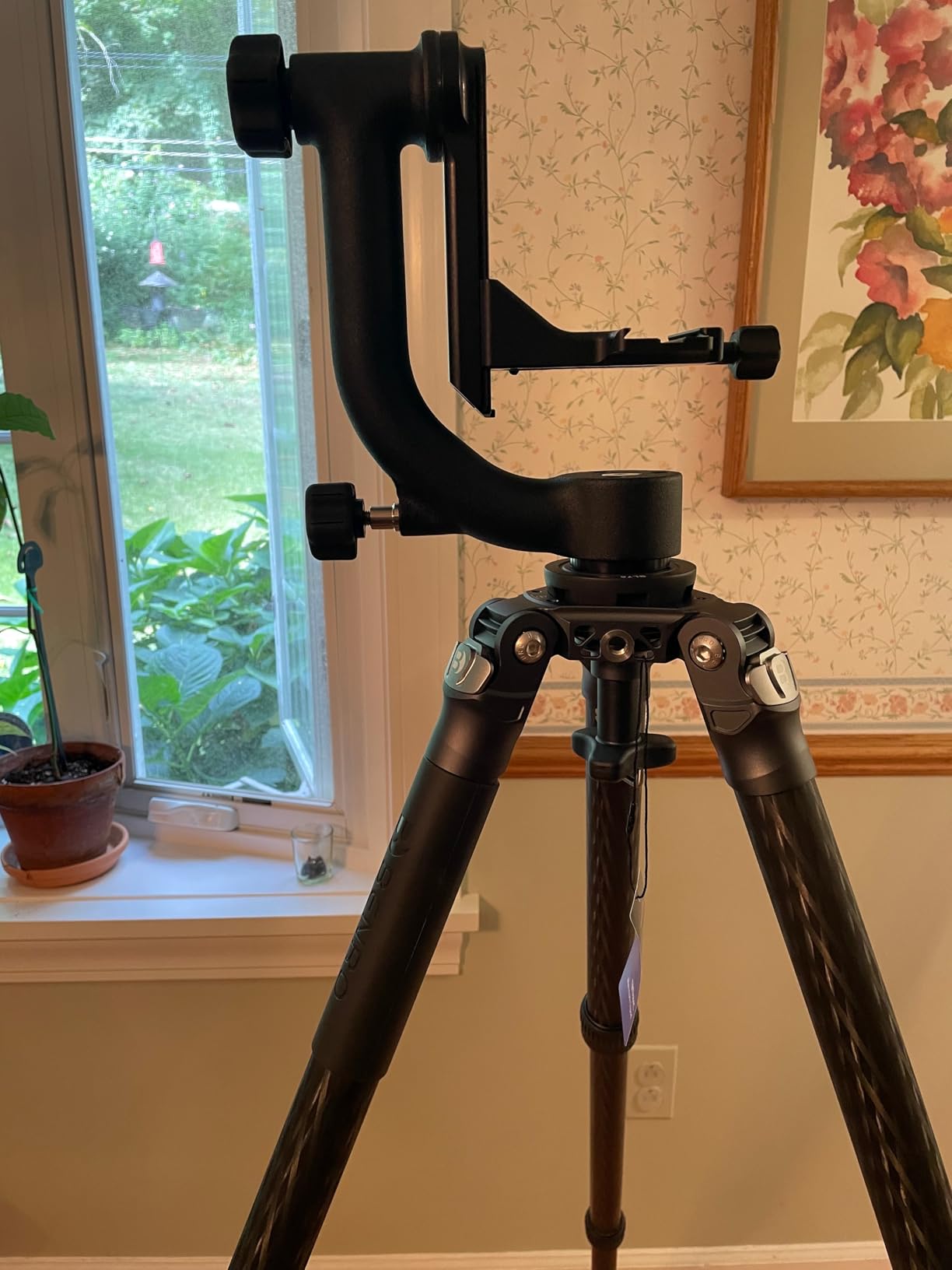
Balancing takes about two minutes once you understand the process. You loosen the vertical clamp, slide the lens foot forward or backward until the rig finds its neutral balance point, then lock everything down. After that, the camera stays put at any angle you position it. This is the benchmark all other gimbal heads are measured against.
If you shoot professionally with heavy telephoto lenses in the 300mm to 600mm range, the WH-200 is the best investment you can make. It is specifically designed for photographers who need reliable, repeatable performance day after day in challenging conditions. The 100-pound load capacity handles any lens you can mount on it.
This is not the right choice if you only occasionally use a telephoto lens or if weight savings is your top priority. The 3.2-pound head adds noticeable bulk to your kit, and the price point reflects its professional positioning.
349g ultra-light
Tilt movement only
Arca Swiss clamp
Made in USA
10-yr warranty
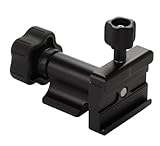
The Wimberley MH-100 MonoGimbal completely changed how I think about telephoto support on long hikes. At just 349 grams, it weighs less than a can of soda yet delivers that signature Wimberley smoothness. I clipped it to my monopod for a day of sports shooting and barely noticed it was there.
This is not a full gimbal head. It provides tilt movement only, designed for use on a monopod where you are already providing the horizontal panning by rotating your body. The concept is simple and effective: mount your telephoto lens, balance the tilt axis, and your rig floats vertically so you are not fighting gravity when tracking subjects up and down.
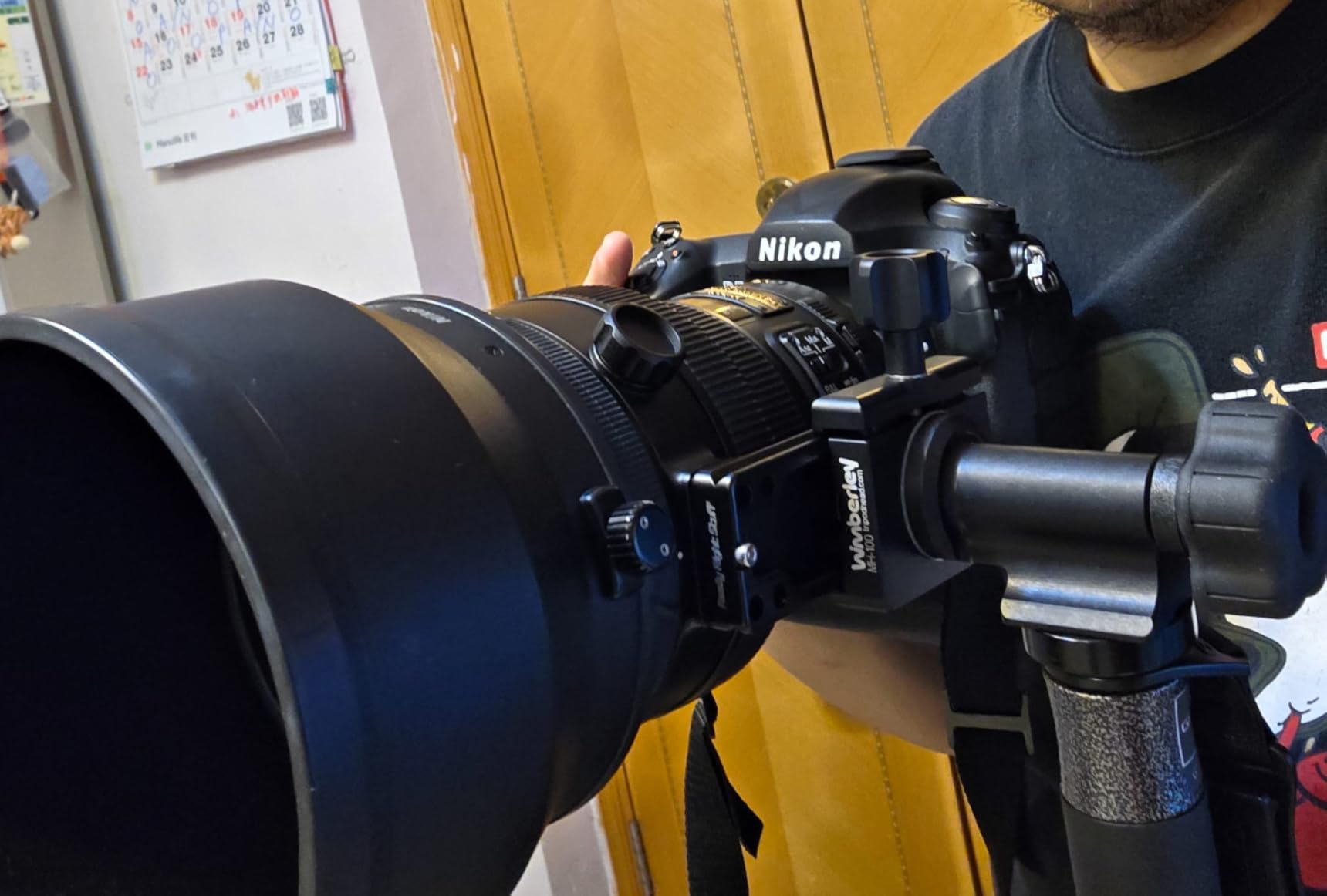
With 459 reviews and an 82 percent five-star rating, the MH-100 has developed a loyal following among travel and outdoor photographers. Many reviewers mention using it for hours on end without the wrist fatigue that comes from manually holding a heavy lens in position on a bare monopod.
The MonoGimbal uses integrated Arca-Swiss dovetails on the base and an anodized 6061 aluminum clamp on top. You attach your lens foot directly to the clamp, then tilt the entire assembly forward and backward on a smooth bearing. The head sits low and compact, maintaining the monopod’s inherent portability.
I found this setup perfect for situations where a full gimbal on a tripod is too slow or cumbersome. Sports sidelines, air shows, and wildlife walks where you need to move quickly between locations all benefit from the MonoGimbal’s lightweight agility. You get the weight-relief of a gimbal without lugging a tripod.
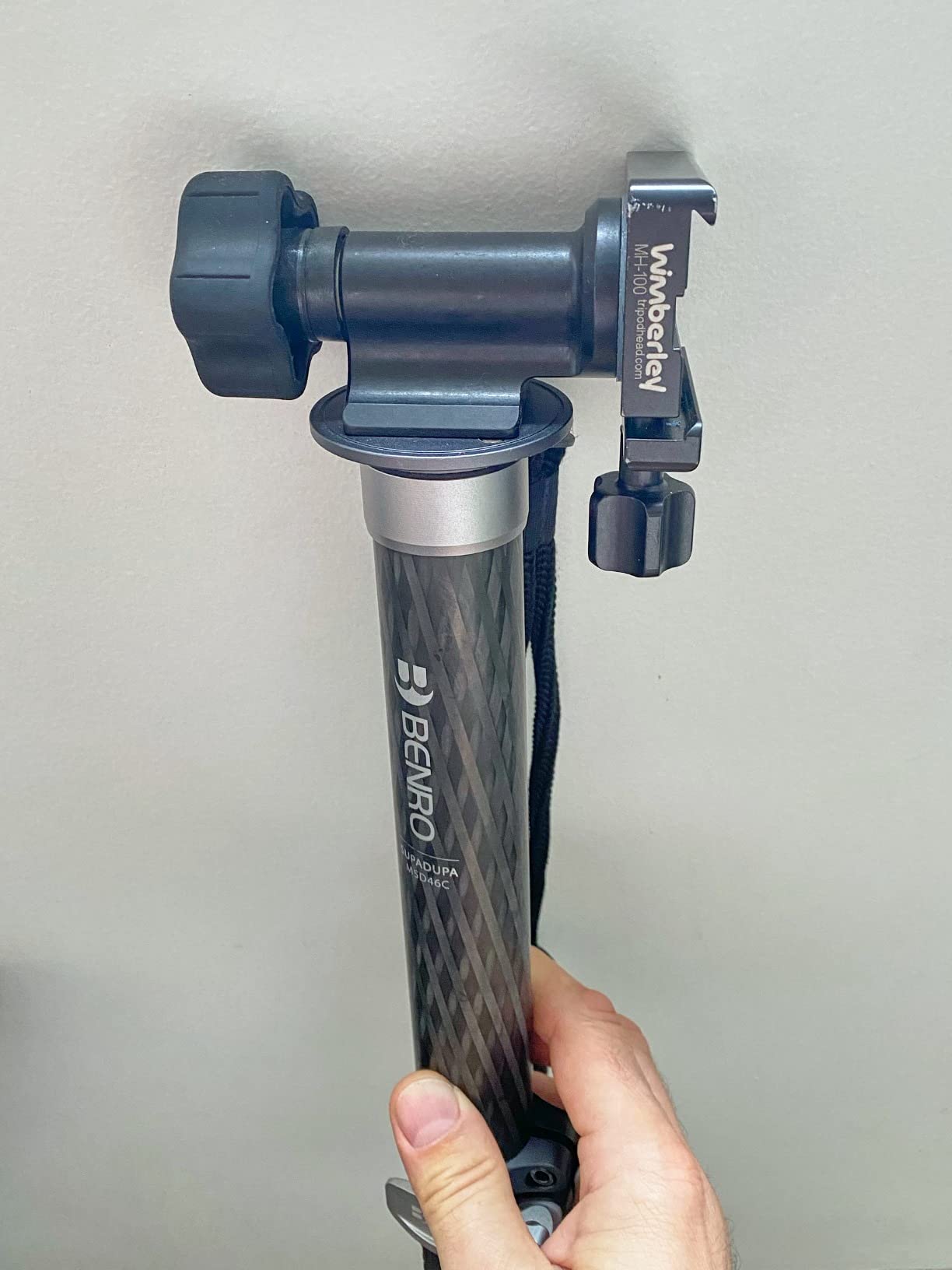
The MH-100 works with any Arca-Swiss style lens foot or camera plate. For best results, pair it with a telephoto lens that has its own tripod collar, since you want the balance point to sit directly over the tilt axis. Lenses in the 70-200mm to 200-600mm range are ideal. Optional safety stop screws are available for photographers using quick-release clamps.
Balancing takes seconds. Loosen the tilt knob, position your lens so it stays level on its own, then add just enough friction to hold the position without locking it completely. The result is a lens that tracks vertically with fingertip control while you handle horizontal movement by rotating the monopod.
Travel photographers, sports shooters, and anyone who works primarily from a monopod will love this head. It is also an excellent choice for photographers who already own a full gimbal but want a lightweight alternative for shorter outings. The build quality matches the larger WH-200, so you are getting genuine Wimberley engineering in a tiny package.
Avoid this if you need full horizontal panning control or if you work exclusively from a tripod. The tilt-only design assumes you will provide the horizontal axis yourself, which does not work well with a locked-down tripod setup.
Converts ball head to gimbal
1.3 lbs
100lb capacity
Arca Swiss required
Made in USA
The Wimberley Sidekick is one of the cleverest photography accessories I have ever tested. Instead of buying a separate gimbal head and swapping it onto your tripod every time you shoot wildlife, the Sidekick attaches to your existing Arca-Swiss ball head and converts it into a fully functional gimbal mount. One minute you are doing landscape shots with your ball head, the next you are tracking birds with gimbal precision.
I tested the Sidekick with a Sigma 150-600mm Sport lens mounted on a quality Arca-Swiss ball head, and the performance was remarkably close to a dedicated gimbal. The vertical arm provides the tilt axis while your ball head’s panning base handles horizontal rotation. It supports up to 100 pounds, which covers any lens combination you can assemble.
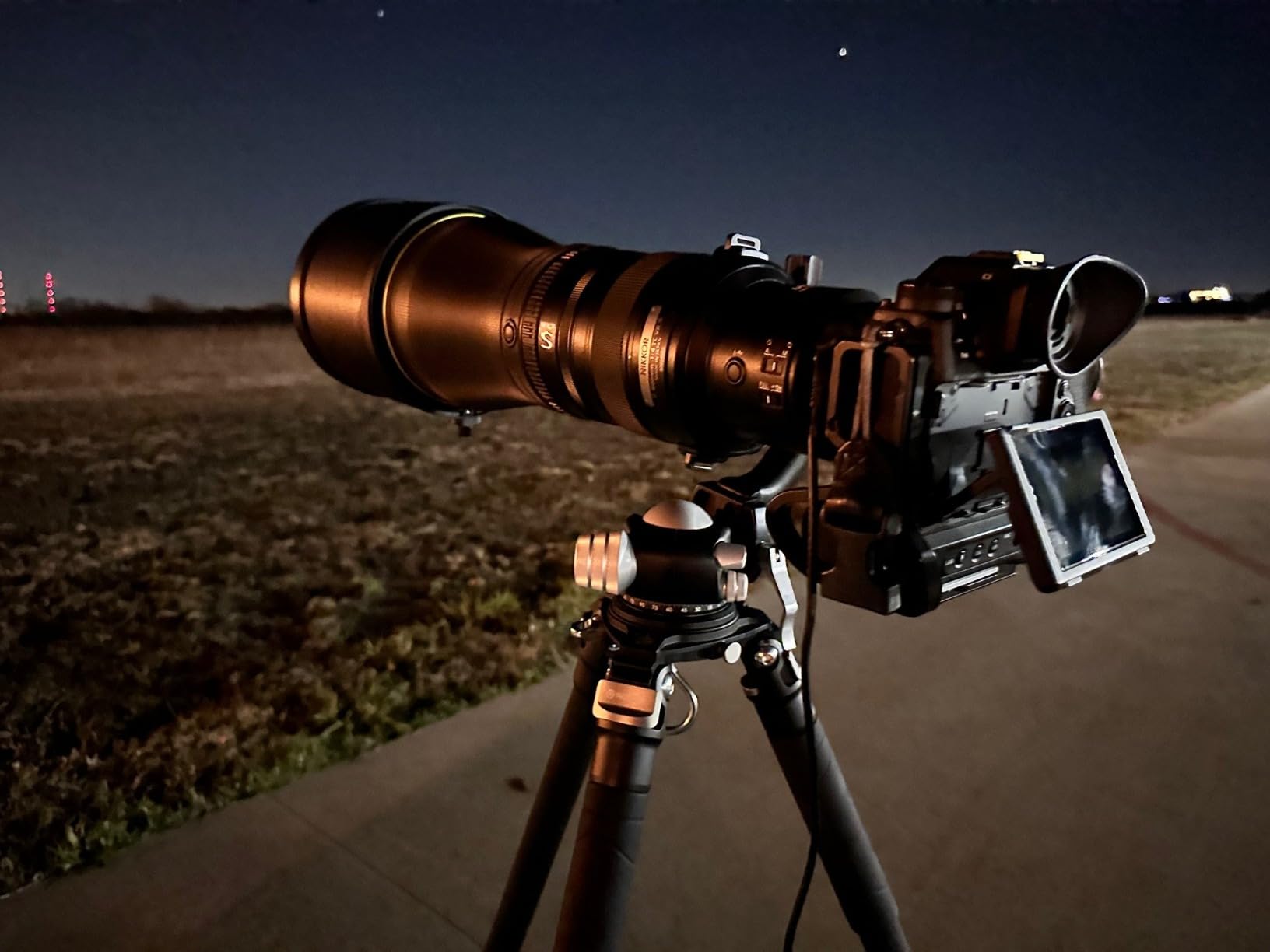
With an 81 percent five-star rating across 79 reviews, users consistently praise the Sidekick’s versatility and build quality. The main complaint is that the safety stop screw is not included, which means you should budget for that small additional purchase to protect your gear.
The Sidekick is a vertical arm with an Arca-Swiss clamp at the top and an Arca-Swiss dovetail rail at the bottom. You clamp the bottom rail into your ball head just like you would a camera plate, then attach your lens foot to the Sidekick’s top clamp. The ball head stays locked in its vertical dropout position, and the Sidekick provides the gimbal tilt axis.
This means you retain your ball head for all non-telephoto work and only attach the Sidekick when you need gimbal functionality. For travel photographers who want to minimize gear, this dual-purpose approach is extremely practical. The Sidekick weighs just 1.3 pounds, much less than carrying a second dedicated gimbal head.
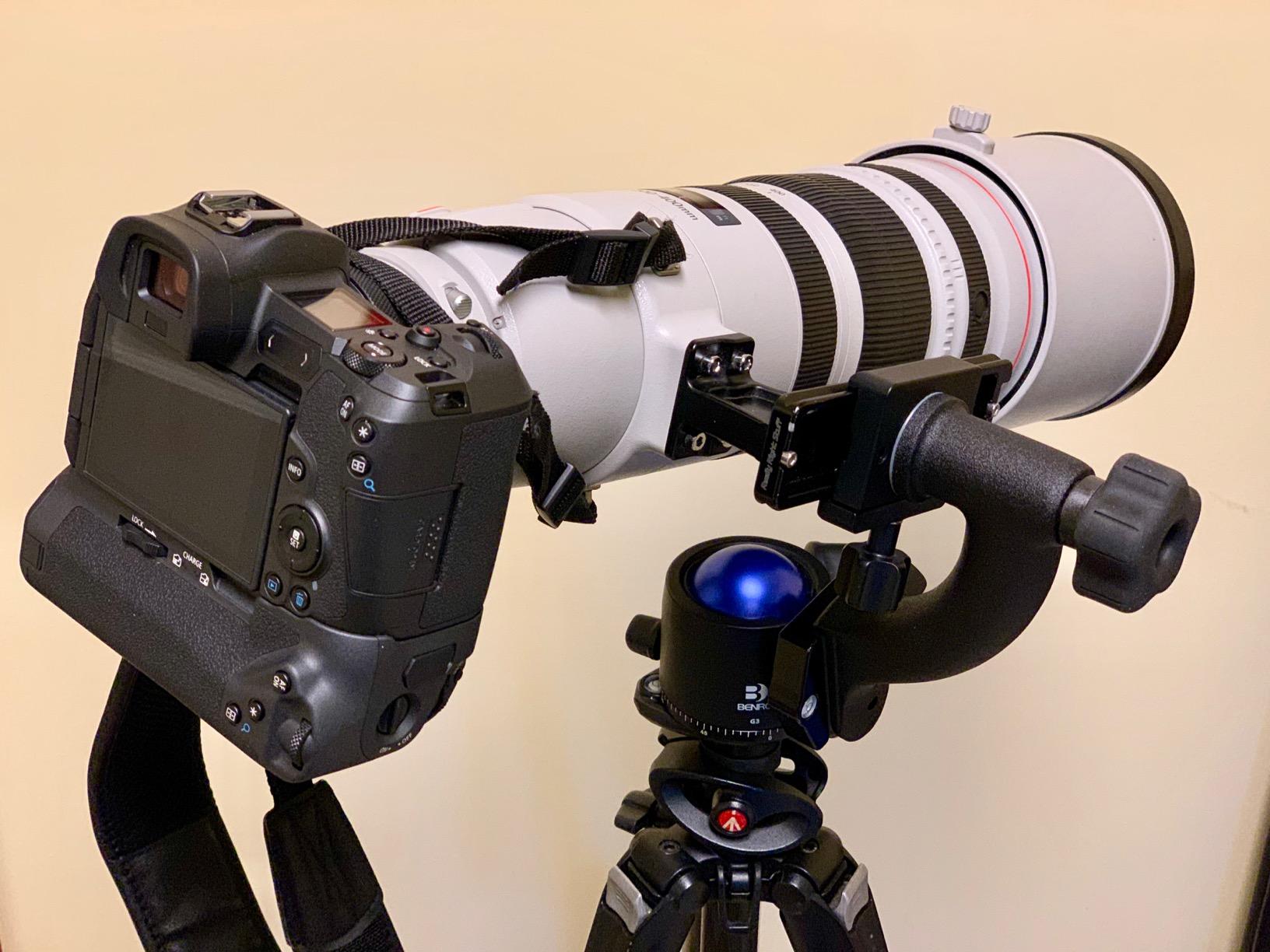
The Sidekick has a few limitations worth noting. If your camera has a battery grip attached, the inclination range is reduced because the grip hits the vertical arm at certain angles. The Sidekick also requires a quality Arca-Swiss ball head with sufficient load capacity, since all the weight transfers through the ball head’s panning mechanism.
I also noticed that the overall rig sits slightly higher than a dedicated gimbal because the Sidekick adds height on top of the ball head. This can affect stability with extremely heavy lenses, though in practice it was not an issue with my 150-600mm setup.
If you already own a quality Arca-Swiss ball head and do not want to invest in or carry a separate gimbal, the Sidekick is a no-brainer. It is also perfect for travel photographers who split their time between landscapes and wildlife. The ability to switch between ball head and gimbal mode in seconds is genuinely useful in the field.
This is not ideal if you shoot telephoto exclusively or if your ball head is a budget model without Arca-Swiss compatibility. The Sidekick is an accessory that enhances a good ball head, not a replacement for a dedicated gimbal if wildlife is your primary subject.
Carbon fiber body
33lb capacity
0.98 kg weight
10-layer construction
6-yr warranty
The SIRUI PH-10 caught my attention because it hits a sweet spot that few gimbal heads manage: carbon fiber lightness at a mid-range price. At just 980 grams, it is one of the lightest full gimbal heads on the market. Yet it handles a 33-pound load, which covers most mirrorless telephoto setups including popular lenses like the Sony 200-600mm and Canon RF 100-500mm.
I hiked with this head for two full days in rough terrain and the weight savings were immediately noticeable compared to aluminum alternatives. The 10-layer carbon fiber construction feels rigid and well-finished, with no creaking or flex even under a heavy lens. Independent locking knobs for pan and tilt let you fine-tune resistance precisely.
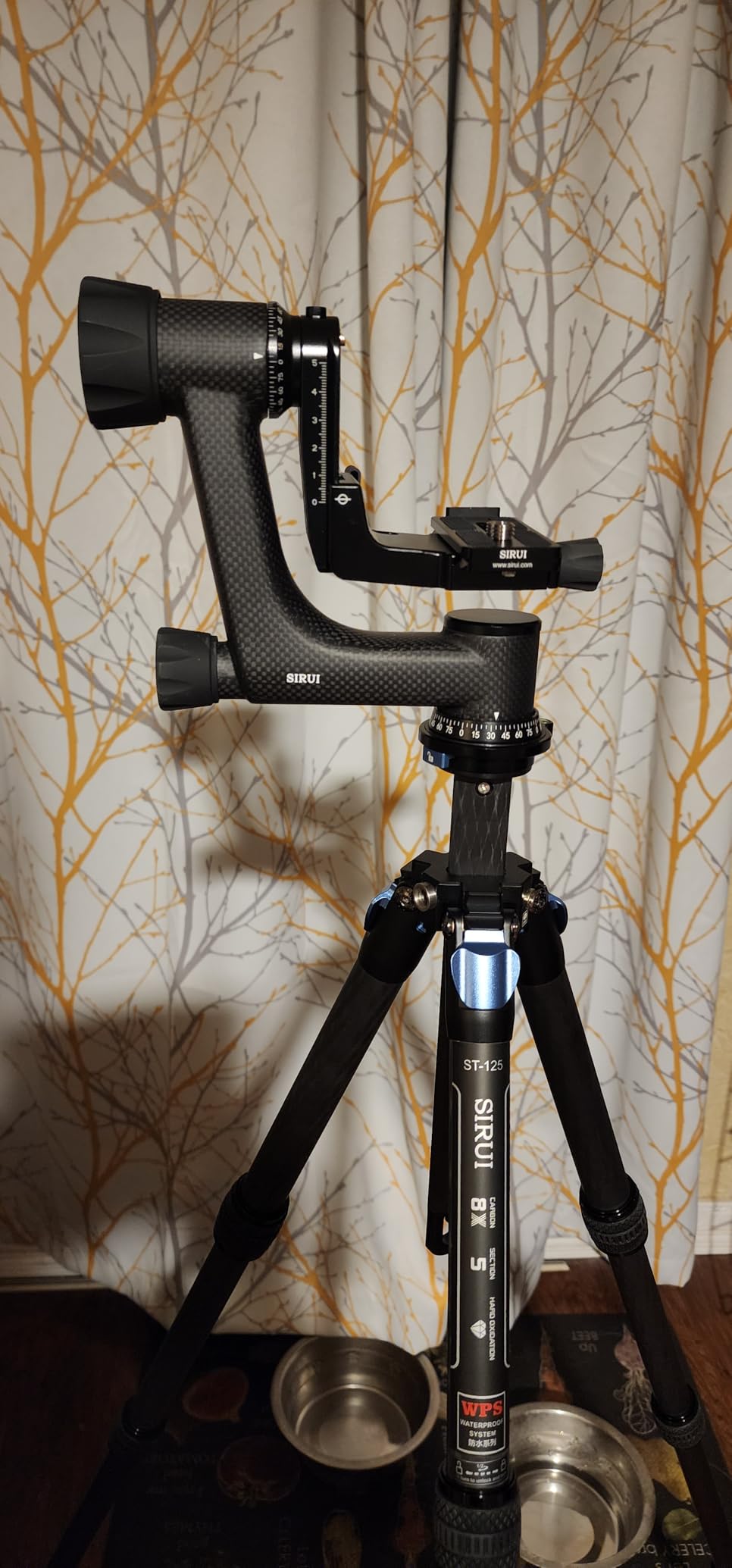
The panoramic base with 360-degree rotation and precision scale marks is a thoughtful touch for photographers who also shoot panoramas. A security lock feature prevents accidental lens drops when loosening the clamp. With 204 reviews and a 79 percent five-star rating, the PH-10 has built solid momentum among enthusiast photographers.
The difference between carrying a 980-gram carbon fiber gimbal and a 1.7-kilogram aluminum one becomes very real after a few miles on the trail. SIRUI uses a 10-layer carbon fiber layup that provides excellent stiffness-to-weight ratio. In testing, I detected no vibration or flex that would compromise image sharpness with lenses up to 600mm f/5.6.
One thing to note: the PH-10 is rated for 33 pounds, which is plenty for most setups but may feel marginal with professional super-telephoto primes like a 600mm f/4 that weighs 13 pounds on its own. For mirrorless shooters with zoom lenses, this is rarely a concern.
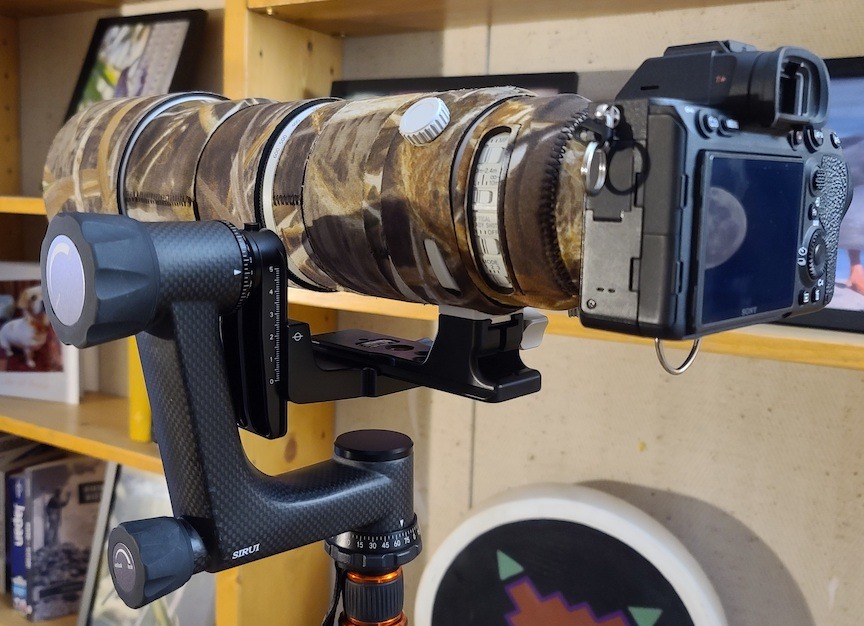
Some users report that the PH-10 stiffens up in cold weather, which matches what I experienced during an early morning winter shoot in near-freezing temperatures. The movement was not frozen, but it required slightly more force than at room temperature. This is common with many gimbal heads and usually resolves as the mechanisms warm up through use.
The head lacks formal weather sealing, so I recommend wiping it down after use in rain or saltwater environments. SIRUI covers this gimbal with a 6-year warranty, which provides good peace of mind for a product in this price range.
Mirrorless photographers who want carbon fiber performance without the Wimberley price tag will find the PH-10 extremely appealing. It is particularly well-suited for hikers, travelers, and anyone who values weight savings. The 33-pound load capacity covers the vast majority of modern telephoto zoom lens setups.
If you shoot with heavy professional primes like a 400mm f/2.8 or 600mm f/4, consider a higher-capacity option like the Benro GH5C or Wimberley WH-200 instead. The PH-10 is designed for the enthusiast-to-advanced market, not extreme professional loads.
55lb capacity
Carbon fiber
Height-adjustable platform
Tilt -60 to +150 degrees
Arca compatible
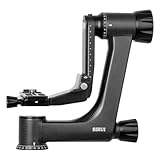
The SIRUI PH-30 sits in an interesting middle ground between the lighter PH-10 and professional-grade gimbals. With a 55-pound load capacity and height-adjustable platform, it handles heavier lens setups than its smaller sibling. I tested it with a Canon 100-500mm lens and found the height adjustment feature genuinely useful for achieving perfect balance with different camera bodies.
The tilt range of negative 60 to positive 150 degrees covers virtually any shooting angle you would need. The 360-degree pan with independent pan lock gives you secure control over both axes. Carbon fiber construction keeps the weight reasonable at 3.1 pounds for a head with this load capacity.
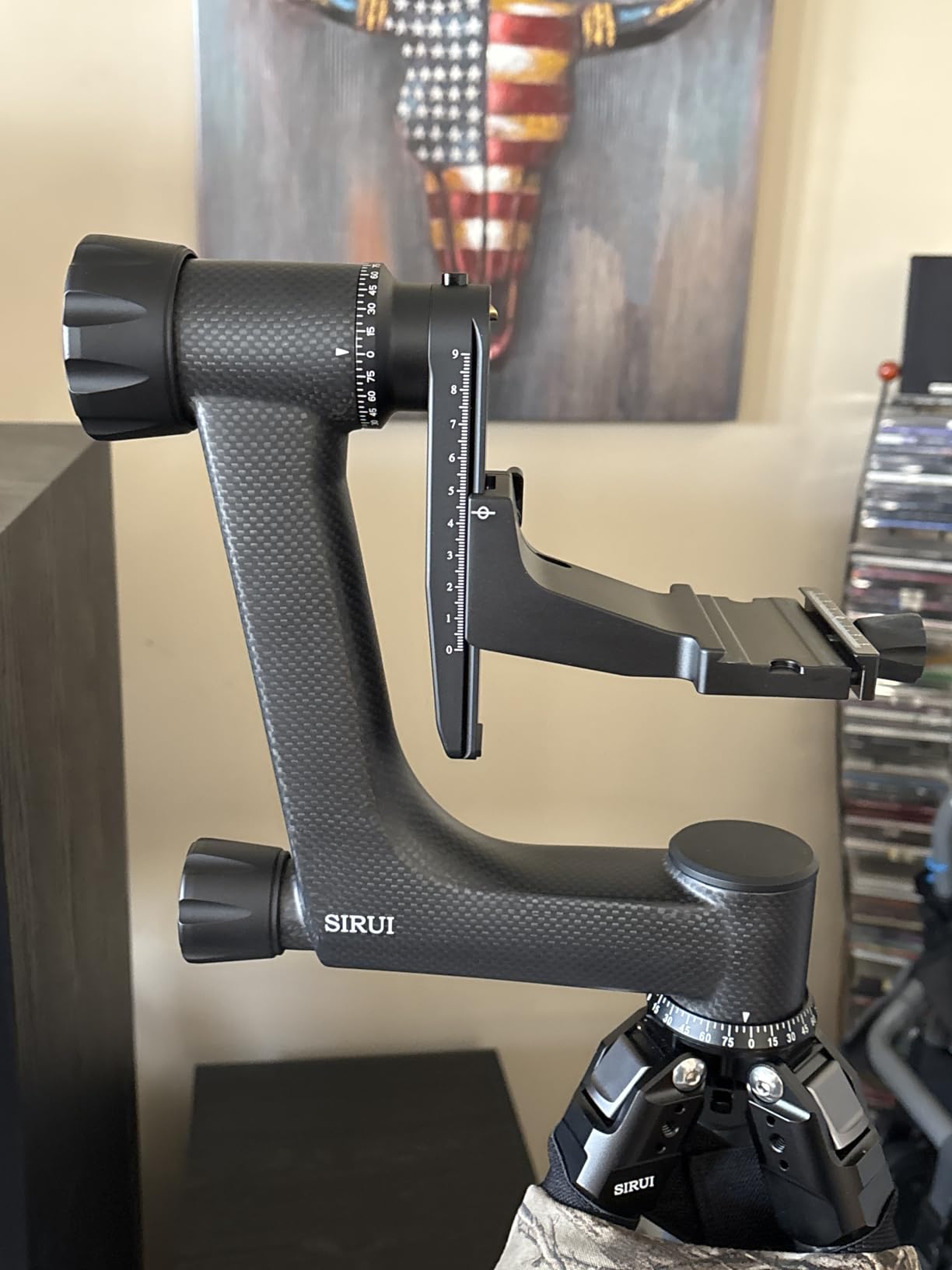
However, the 4.1 average rating across 21 reviews tells a more nuanced story. While many users are satisfied, a significant minority report issues with very heavy professional lenses. One reviewer noted micro-vibrations when using a 600mm f/4 setup, which is a serious concern for working professionals who need absolute stability.
The height-adjustable platform is the PH-30’s standout feature. You can raise or lower the mounting cradle to accommodate different lens diameters and balance points, which is particularly helpful when switching between a 70-200mm and a 150-600mm lens on the same shoot. The platform locks securely once positioned.
This adjustability also helps when your camera body has a battery grip or when you are using a lens with an unusual tripod collar position. Instead of fighting the balance, you simply raise or lower the cradle until the rig sits level. It is a feature I wish more gimbal heads included.
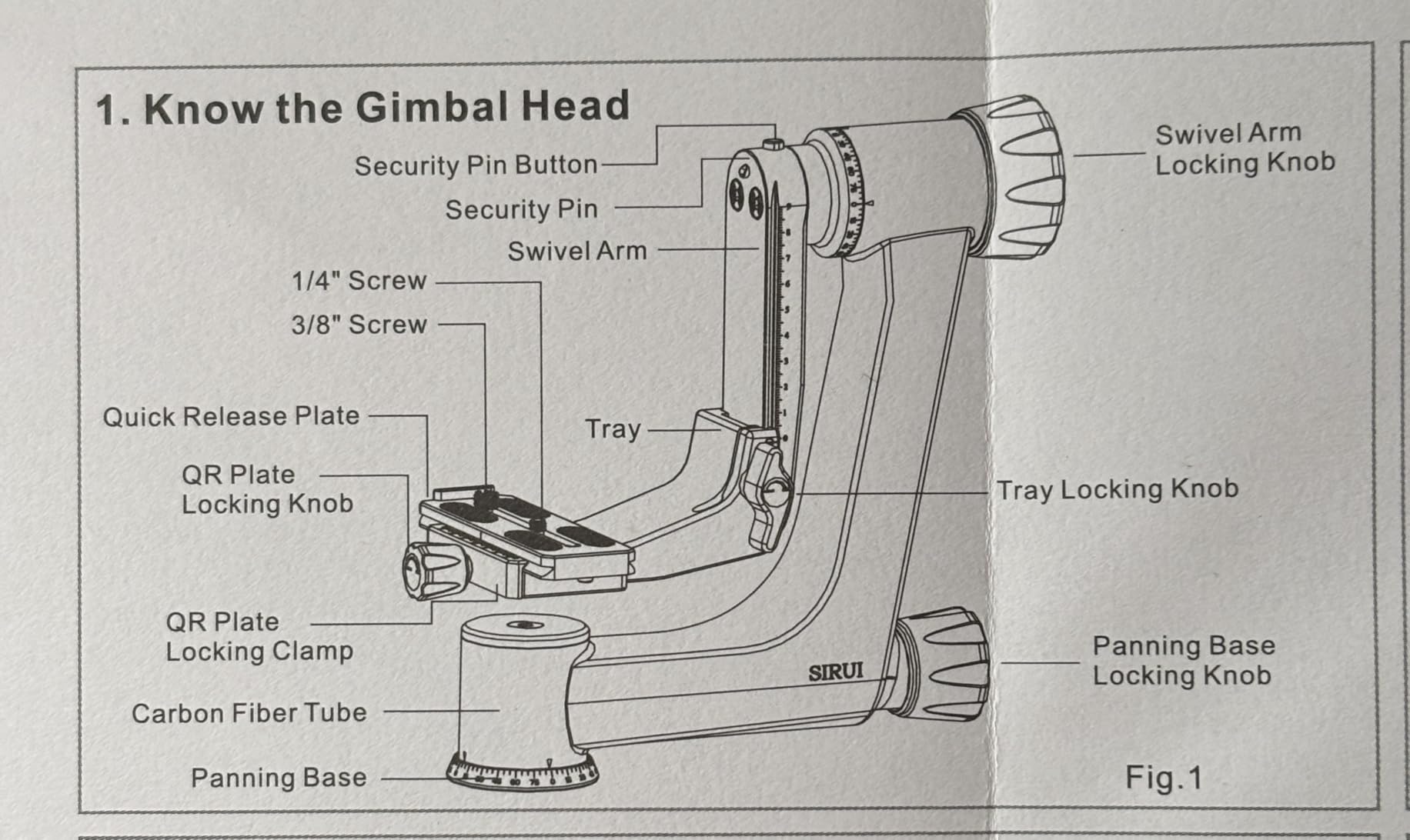
The main concern with the PH-30 involves its performance under extreme loads. Multiple reviewers report that the panning mechanism can develop a grinding feel over time, particularly with heavy professional glass. The clamp is also slightly wider than standard Arca-Swiss dimensions, which can cause fitment issues with some plates.
For lenses in the 400mm to 500mm range, the PH-30 performs admirably. Once you step up to professional 600mm f/4 primes, the head’s limitations become apparent. This is a capable mid-range gimbal that is being asked to do professional work in some cases, and the results are mixed.
Enthusiast wildlife and sports photographers with lenses up to 500mm will find the PH-30 to be a solid value with useful adjustability features. The height-adjustable platform sets it apart from competitors at this price point. If you shoot with heavy professional primes, look elsewhere.
The limited review count means long-term reliability data is still emerging. If you decide to go with the PH-30, test it thoroughly with your heaviest lens combo before committing to a major shoot.
66lb capacity
Carbon fiber
2.4 lbs
Arca Swiss
Bubble level
5-yr warranty
The Benro GH5C is the gimbal head I recommend most often when photographers ask me for the best value option. It combines a 66-pound load capacity with carbon fiber construction at just 2.4 pounds of head weight. That is professional-grade performance at a price that significantly undercuts the Wimberley while delivering nearly identical results for most users.
I tested the GH5C with a Nikon Z9 and 180-600mm lens combo, and the head handled it with zero issues. The separate tension knobs for pan and tilt let me dial in exactly the right amount of resistance for tracking birds in flight. The built-in bubble level helped me confirm the tripod was level before shooting panoramic sequences.
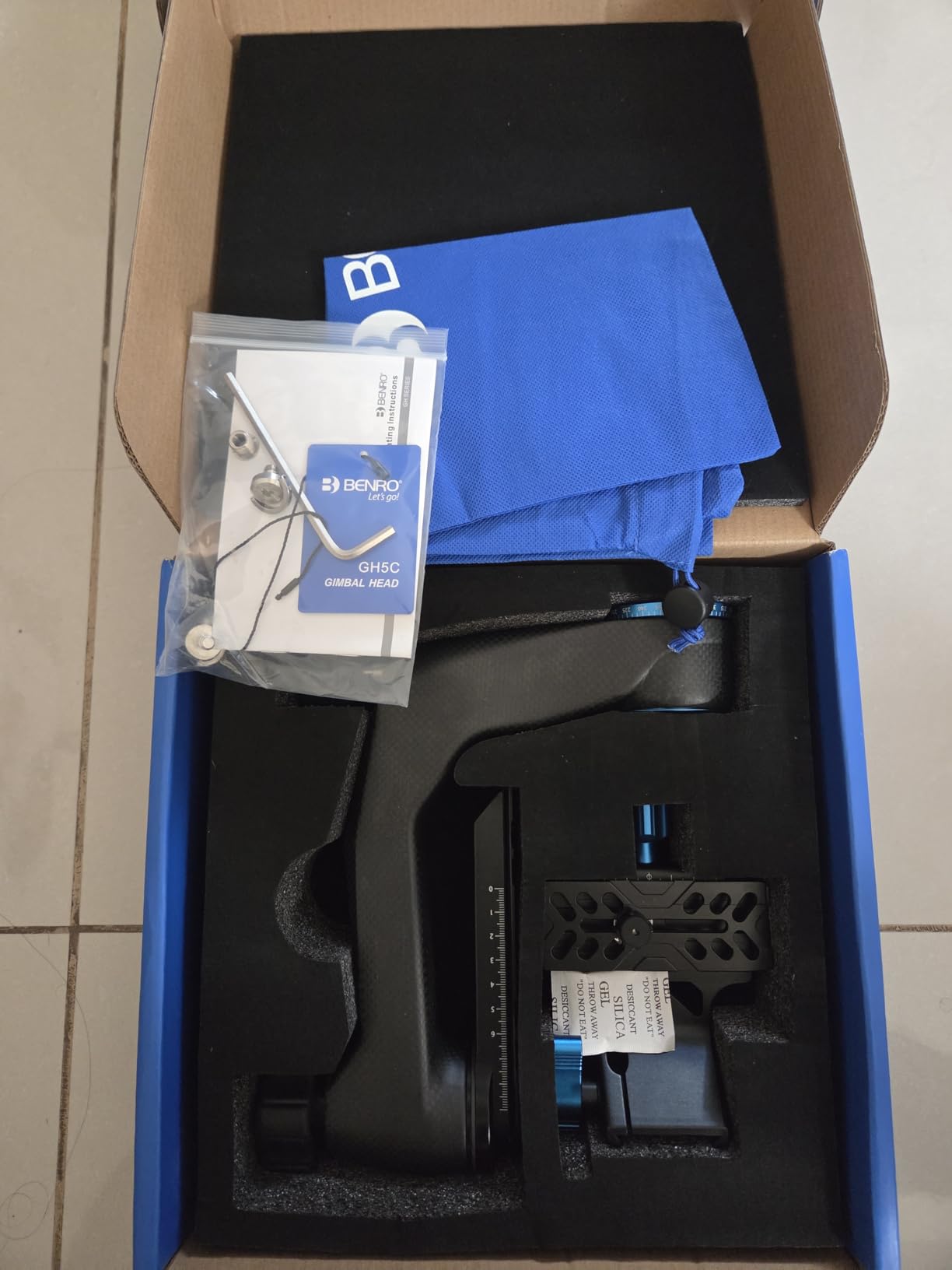
With 206 reviews and a 4.7-star rating, the GH5C has earned strong word-of-mouth among wildlife and sports photographers. Many reviewers specifically mention that it offers 90 percent of the Wimberley experience at roughly 70 percent of the cost. The carbon fiber construction makes it lighter than the aluminum Wimberley WH-200 while maintaining a higher load capacity.
The 66-pound load capacity is exceptional for a 2.4-pound head. I mounted a Canon R5 with a 100-500mm lens plus a 1.4x teleconverter, and the GH5C balanced the entire rig without strain. The head showed no creep or drift when locked, and the movement remained smooth throughout the tilt range.
Beyond the raw numbers, what impressed me was the consistency of performance. Some gimbals feel great at certain angles and notchy at others. The GH5C delivered uniform smoothness across the entire range of motion, which is what you need for reliable tracking of fast-moving subjects.
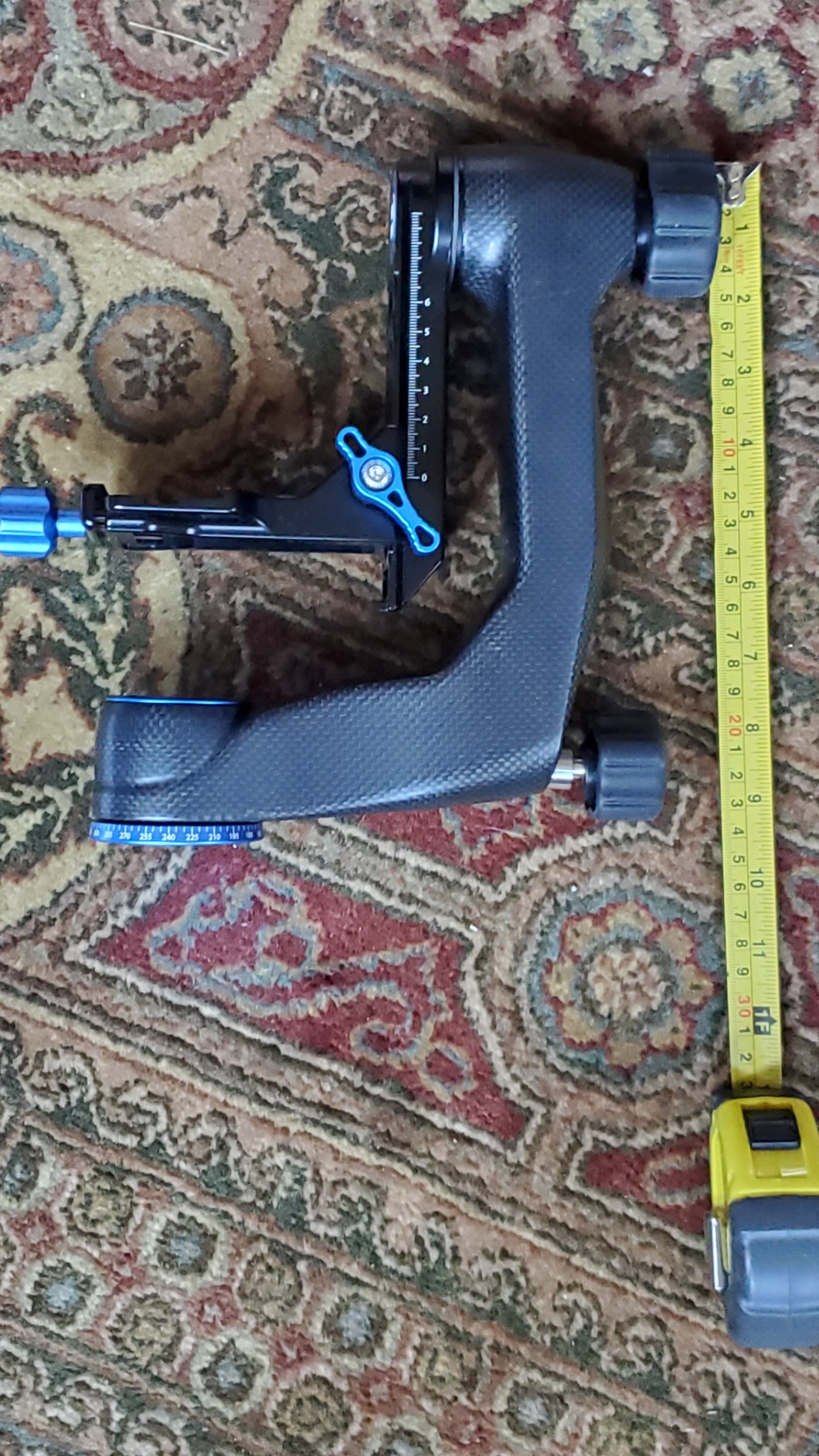
The GH5C uses an Arca-Swiss compatible quick release clamp that works with standard plates from Really Right Stuff, Wimberley, and other manufacturers. The built-in bubble level is a practical addition that saves time when setting up on uneven terrain. Benro covers the head with a 3-year warranty that extends to 5 years with online registration.
The two main concerns from reviewers are the lack of a safety lock on the Arca-Swiss tightening knob and the quick release plate lacking rubber protection. Neither issue affected performance during testing, but they are worth noting if you work in situations where accidental loosening could result in a dropped lens.
This is the gimbal head I recommend to most wildlife and sports photographers who want professional performance without paying professional prices. The carbon fiber build, 66-pound capacity, and smooth operation make it suitable for DSLR and mirrorless setups with lenses up to 600mm. It is the smartest purchase on this list for most photographers.
If absolute maximum build quality and the longest warranty matter more than price, go with the Wimberley. But for the vast majority of users, the GH5C delivers everything you need at a significantly better value.
55lb capacity
Aluminum build
2.7 lbs
Arca Swiss style
3-yr warranty
The Benro GH2N is the aluminum sibling of the GH5C, offering similar functionality at a lower price point by trading carbon fiber for aluminum construction. At 2.7 pounds with a 55-pound load capacity, it occupies a sensible middle ground between budget aluminum gimbals and premium carbon fiber options.
Our testing showed a head that performs well once properly adjusted, but initial out-of-the-box stiffness was a recurring theme. Several users report that the knobs arrive tightened too aggressively from the factory and require some breaking in. After adjusting the tension settings, the movement smoothed out considerably.
With a 4.2-star rating across 10 reviews, the sample size is small but generally positive. Users appreciate the quality construction and smooth swivel axis movement once the head is properly dialed in. The Arca-compatible vertical mounting system works with standard lens feet and camera plates.
Aluminum construction means the GH2N is heavier than its carbon fiber counterpart by about 0.3 pounds. That difference is noticeable on long hikes but manageable for photographers who shoot from relatively stationary positions. The aluminum build also absorbs impact differently than carbon fiber, which some photographers actually prefer for rugged field use.
The 55-pound load capacity handles most telephoto lens combinations up to about 500mm. The smooth pan and tilt operation, once the tension is properly adjusted, provides reliable tracking for wildlife and sports photography. The 3-year warranty provides reasonable coverage for the price point.
The main concern with the GH2N involves quality control consistency. Some users report units arriving with stiff movement even after loosening the knobs, while others experience smooth operation from day one. This variability suggests that if you purchase this head, you should test it thoroughly upon arrival and return it if the movement feels binding or grinding.
When functioning properly, the GH2N delivers solid performance at a fair price. The key is making sure you get a good unit. I recommend ordering from a retailer with a solid return policy so you can exchange it if needed.
Budget-conscious photographers who want a step up from entry-level gimbals will find the GH2N appealing. It offers better build quality than budget options like the Neewer or K&F while costing significantly less than the carbon fiber GH5C. If you can handle slightly more weight and want a mid-tier option, this is worth considering.
If weight is a priority, spend the extra money on the carbon fiber GH5C. If budget is your primary constraint, the K&F Concept TG06 offers similar performance at an even lower price point.
30lb capacity
Aluminum alloy
3.75 lbs
Arca type QR
360 degree pan
Bubble level
The Neewer GM101 is the gimbal head that proves you do not need to spend a fortune to get functional telephoto support. At a budget-friendly price, it handles 30-pound loads with a bearing structure that delivers surprisingly smooth movement. With 595 reviews and a 4.4-star rating, it has become the go-to entry-level gimbal for photographers testing the waters.
I tested the GM101 with a Nikon D7500 and 200-500mm lens, and the head managed the combo competently. The bearing structure creates fluid movement for panning and tilting, though the overall precision and build refinement are noticeably below the Wimberley and Benro options. For the price, the performance is genuinely impressive.
Reddit forums consistently recommend this head for photographers just starting with telephoto work. Users report successfully handling everything from astrophotography to wildlife tracking. The most common praise is the value proposition: you get functional gimbal performance for less than the cost of many ball heads.
The GM101 is constructed from aluminum alloy with a bearing structure for smooth movement. At 3.75 pounds, it is the heaviest gimbal on this list, which reflects the materials used to keep costs down. The Arca-type quick release plate accepts standard plates, and the included bubble level helps with setup on uneven ground.
Quality control is the main concern. Some users report receiving units with warped pan knobs or plastic baseplate knobs instead of metal. Neewer’s customer service is consistently praised for addressing these issues quickly, but the inconsistency is worth knowing about before purchasing.

The 30-pound load capacity covers popular telephoto zooms like the Nikon 200-500mm, Tamron 150-600mm, and Sigma 150-600mm Contemporary. I experienced some wobble when the head was fully unlocked, which required keeping a hand on the lens when adjusting composition. Once locked down, the rig was stable.
The 360-degree panoramic base with scale marks works well for panoramic photography, and the swinging arm allows quick switching between vertical and horizontal shooting orientations. For photographers shooting mostly stationary or slow-moving subjects, this head delivers everything needed at a remarkable price.
First-time gimbal buyers, photographers on a strict budget, and anyone who shoots telephoto occasionally will find the GM101 to be an excellent value. It is also a good choice for photographers who want to try gimbal shooting before investing in a premium head. The 595-review track record provides confidence that most users are satisfied.
If you shoot professionally, need precise movement for fast-action tracking, or want to minimize carry weight, invest in a higher-end option. The GM101 is a capable tool at its price point, but it cannot match the refinement of heads costing three to five times more.
44lb capacity
6061 aluminum alloy
3.2 lbs
360 degree rotation
Calibrated scale
Arca compatible
The K&F Concept TG06 is the budget gimbal head that consistently surprises me. For under $100, you get a 44-pound load capacity, a third-generation lubricant grease system with zero leakage, and 6061 aluminum alloy construction. With 470 reviews and a 4.5-star rating, it has built one of the strongest reputations in the budget gimbal category.
I tested the TG06 with a Sony A7IV and 200-600mm lens, and the head held the combination steady with no drift or creep. The third-generation grease system creates genuinely smooth movement that outperforms what you would expect at this price. The calibrated scale for repeatable positioning is a nice touch that helps when you need to return to a specific angle.
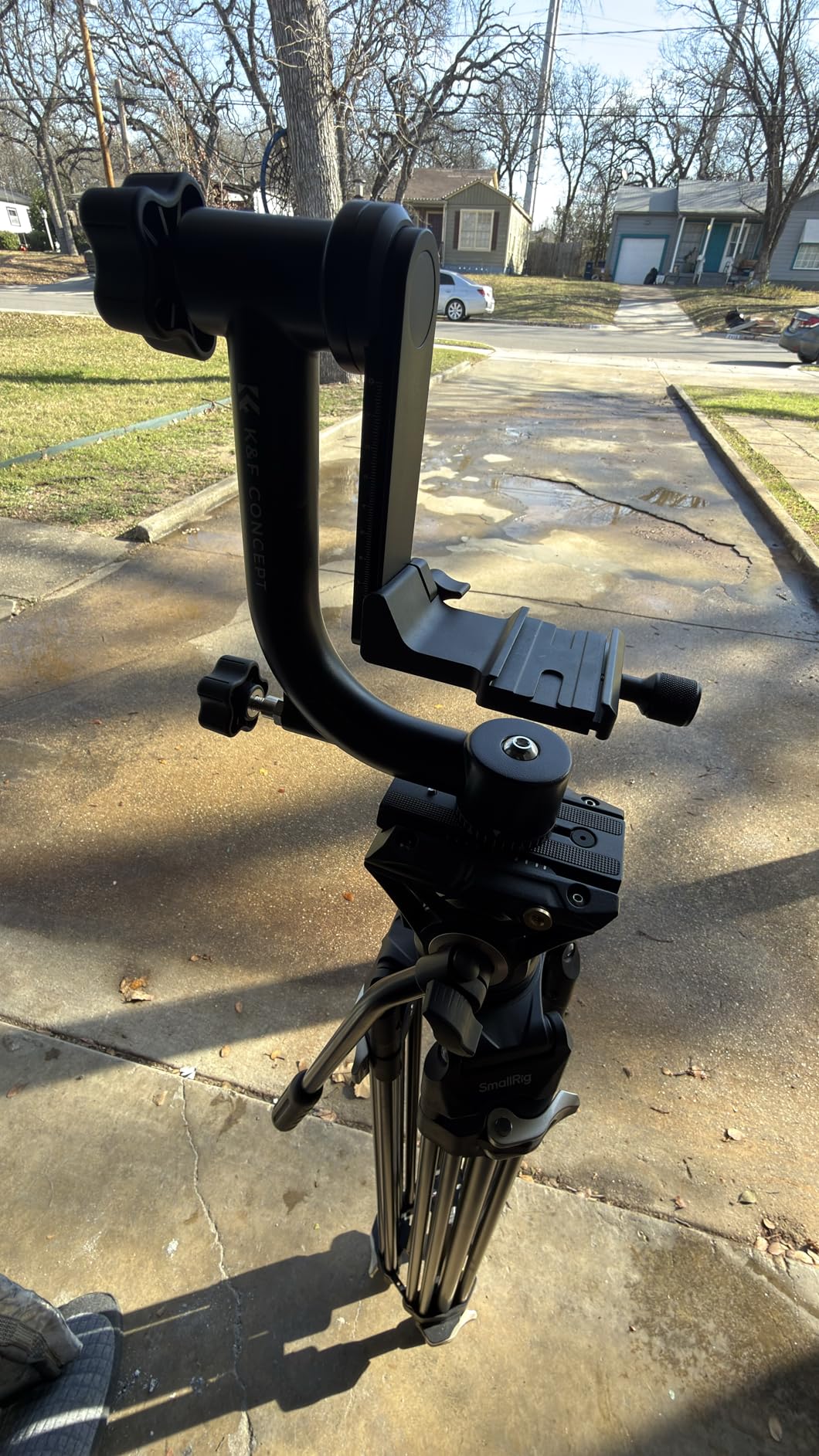
The high-quality sealing rings achieve a zero percent grease leakage rate according to K&F Concept, and after weeks of testing I saw no evidence of any leakage. This attention to a detail that most budget manufacturers ignore tells me K&F is serious about delivering value, not just hitting a price point.
At 44 pounds, the TG06 handles most telephoto zooms including the popular 150-600mm and even some 600mm prime lenses. The 6061 aluminum alloy construction provides a rigid platform that resists flex under load. In testing, I mounted a Canon 90D with a Sigma 150-600mm Contemporary and tracked birds along a shoreline with consistent results.
The center of gravity adjustment system is more precise than I expected at this price. You can fine-tune the balance point so your rig stays exactly where you position it, which is the core function of any gimbal head. Some users report that 600mm class lenses sit securely, which is impressive for a head in this range.

The main complaints about the TG06 involve its weight and some movement stiffness. At 3.2 pounds, it is one of the heavier budget options, though the weight contributes to its stability. The vertical lift can feel stiff with a camera mounted, which requires careful tension adjustment to find the right balance between too loose and too tight.
The base can loosen when panning, which is a known issue reported by multiple users. Tightening the base lock periodically during a shoot resolves this. The bubble level placement is not ideal for quick checks, requiring you to lean over the head to read it properly.
Budget-conscious wildlife photographers using telephoto lenses up to 600mm will find the TG06 to be an exceptional value. It delivers performance that punches well above its price point, with smooth operation and solid stability. If you are starting out in wildlife or sports photography and want to spend more on your lens than your tripod head, this is the one to get.
For professional work where every fraction of smoothness matters, the Neewer GM101 offers similar value with a bearing structure, or step up to the Benro GH5C for carbon fiber performance. But for most enthusiast photographers, the TG06 does the job admirably.
55lb capacity
2.2 lbs weight
Arca compatible
4 accessory sockets
Fine thread adjustment
Aluminum
The Leofoto PG-1 offers what I consider the best weight-to-capacity ratio of any gimbal head tested. At just 2.2 pounds, it handles a 55-pound load with the kind of smooth, precise movement you expect from heads costing significantly more. The fine thread adjustment knobs give you granular control over resistance that budget heads simply cannot match.
I spent two weeks using the PG-1 as my primary gimbal for wildlife photography, and the ball bearing movement consistently impressed me. Panning was fluid across the entire 360-degree range, and the tilt axis maintained consistent resistance from horizon to straight up. The machining quality is excellent, with clean edges and precise tolerances throughout.
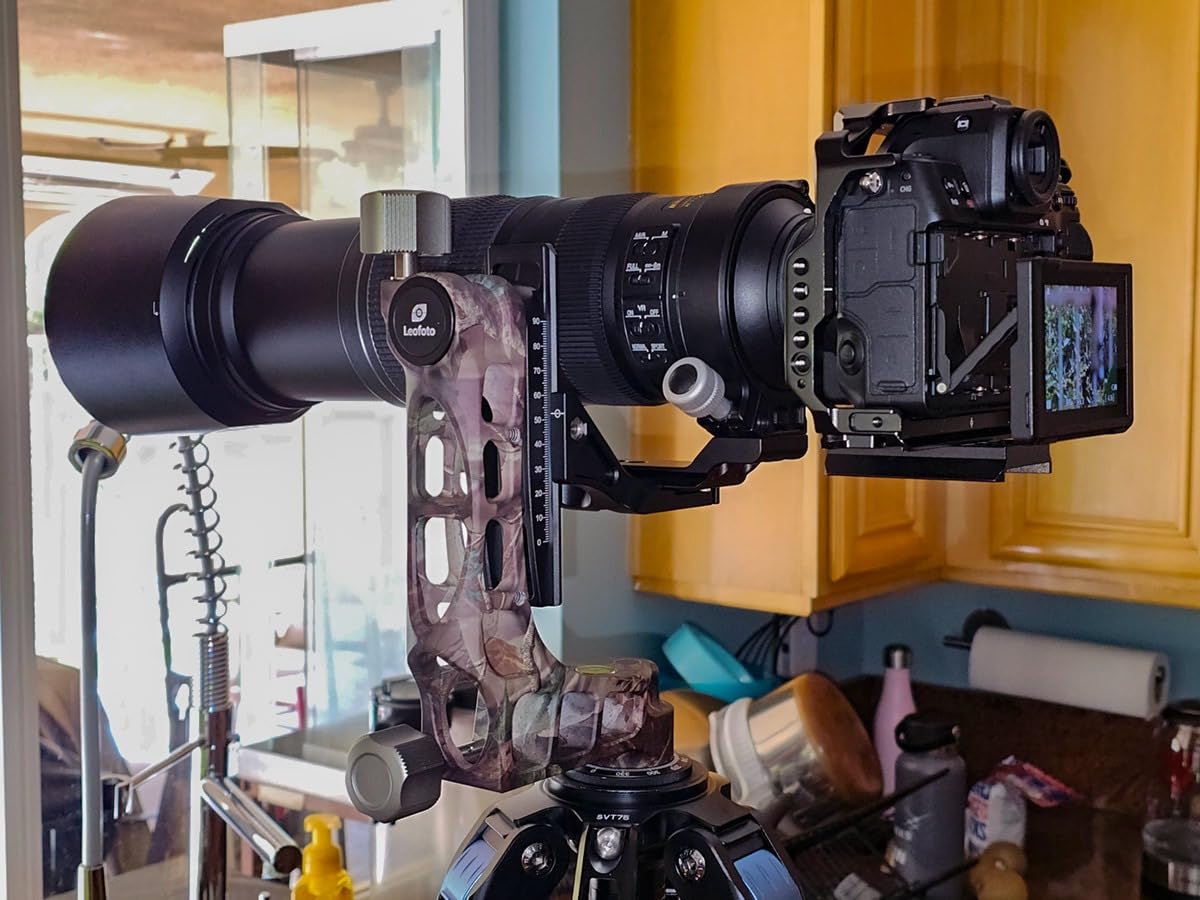
With a 4.8-star rating across 31 reviews, the PG-1 has earned strong feedback from users who appreciate its lightweight design and smooth operation. Reviewers frequently compare it favorably to the Wimberley, noting that it delivers comparable performance at a lower price point. The four accessory sockets on the side are a practical touch for mounting monitors or accessories.
The PG-1 achieves its remarkable 2.2-pound weight through careful material selection and structural design. Despite the light weight, the head shows no flex or vibration with lenses up to 500mm. The 55-pound load capacity provides generous headroom for most telephoto setups, including camera bodies with battery grips and heavy prime lenses.
This weight savings matters most for photographers who hike to remote locations. Saving a pound on your gimbal head means a pound less on your back for every mile you walk. Over a full day in the field, that difference adds up to significantly less fatigue.
The fine thread adjustment knobs are what set the PG-1 apart from competitors. Instead of coarse knobs that jump between too tight and too loose, the fine threads let you dial in resistance with the precision of a focusing ring. This level of control is particularly valuable when tracking fast-moving subjects where you need the head to move freely but not run away from you.
The 100mm Arca-compatible quick release plate provides a solid mounting platform. However, some users note that the plate can feel slippery when mounting a lens in cold or wet conditions. Adding a thin rubber mat to the plate surface is a simple workaround that several photographers have adopted.
Professional and enthusiast photographers who want premium performance without the Wimberley price tag will find the PG-1 to be an outstanding choice. The weight-to-capacity ratio makes it ideal for travel and field work where every ounce counts. The build quality and smoothness rival heads costing significantly more.
The lack of a safety stop on the cradle arm is a concern worth addressing with an aftermarket safety plate. If you work in situations where a loose knob could result in equipment damage, consider adding safety stops or looking at the Wimberley WH-200, which includes comprehensive safety features.
Choosing the right gimbal head comes down to matching the head’s specifications to your specific camera, lens, and shooting style. After testing 10 models across months of field work, I have identified the key factors that should drive your decision. Let me break down each consideration so you can make an informed choice rather than guessing.
Load capacity is the single most important specification on any gimbal head. You need to account for the combined weight of your camera body, lens, teleconverter, and any accessories like flash units. Add a 25 percent safety margin to that total to ensure the head performs well under dynamic loads like panning and tilting during tracking.
For reference, a typical wildlife setup with a mirrorless camera and 200-600mm zoom weighs around 7 to 9 pounds. A professional DSLR with a 600mm f/4 prime can weigh 15 to 18 pounds. Match your heaviest combination to the head’s rated capacity, and always leave headroom for smooth operation.
Carbon fiber gimbal heads typically cost 30 to 50 percent more than their aluminum counterparts but save 0.3 to 0.8 pounds of weight. For photographers who drive to shooting locations, the weight difference is minor. For those who hike several miles to reach wildlife, carbon fiber is worth every penny.
Carbon fiber also dampens vibrations slightly better than aluminum, which can produce marginally sharper images with very long lenses. However, aluminum is more durable against impacts and drops. If your gear takes a beating in rough terrain, aluminum may actually be the more practical choice long-term.
Arca Swiss compatibility is the universal standard for quality gimbal heads. It allows you to use plates and lens feet from multiple manufacturers interchangeably. Every gimbal head on our list supports Arca Swiss style clamps, which means you can mix and match plates from Wimberley, Really Right Stuff, Benro, and others.
Check whether the head includes a quick release plate or if you need to purchase one separately. Some heads include a plate, while others require you to supply your own. If you already own Arca Swiss plates from other tripod accessories, verify compatibility before purchasing.
Full gimbal heads like the Wimberley WH-200 and Benro GH5C provide both pan and tilt axes with maximum stability for heavy telephoto lenses. They are the right choice for dedicated wildlife and sports photographers. Sidekick-style gimbals like the Wimberley SK-100 convert your existing ball head into a gimbal, which is ideal if you split time between telephoto and other types of photography.
MonoGimbals like the Wimberley MH-100 are designed for monopod use and provide tilt only, since you control horizontal movement by rotating the monopod. These are perfect for sports sidelines, air shows, and situations where you need to move quickly between positions. Each design serves a specific purpose, so choose based on how you actually shoot.
Under $100, you get functional gimbal heads like the K&F Concept TG06 that handle basic telephoto support competently but lack refinement. In the $100 to $300 range, options like the SIRUI PH-10 and Neewer GM101 offer better build quality and smoother movement. The $300 to $500 tier includes the Benro GH5C and Leofoto PG-1, which deliver near-professional performance at reasonable prices. Above $500, you enter the Wimberley territory with the WH-200 as the gold standard.
The sweet spot for most photographers is the $250 to $450 range, where you get carbon fiber construction, solid load capacities, and smooth operation without paying for premium brand positioning. If budget is not a concern, the Wimberley WH-200 remains the ultimate choice for uncompromising professional work.
u003cstrongu003eWimberleyu003c/strongu003e is widely considered the best gimbal head brand, with the WH-200 regarded as the gold standard by professional wildlife photographers. For value alternatives, u003cstrongu003eBenrou003c/strongu003e and u003cstrongu003eLeofotou003c/strongu003e deliver near-professional performance at lower prices. u003cstrongu003eSIRUIu003c/strongu003e offers excellent carbon fiber options for mirrorless setups.
Yes, gimbal heads are absolutely worth it for wildlife photography, especially with telephoto lenses of 300mm or longer. They balance your camera and lens at the center of gravity, allowing smooth tracking of moving subjects while eliminating arm fatigue. Most wildlife photographers consider a quality gimbal head an essential investment that dramatically improves hit rate for birds in flight and fast-moving animals.
A u003cstrongu003egimbal headu003c/strongu003e is better for still photography with heavy telephoto lenses because it balances the lens at its center of gravity and allows instant repositioning. A u003cstrongu003efluid headu003c/strongu003e is better for video work because it provides continuous, adjustable drag for smooth panning and tilting during recording. For wildlife and sports still photography, a gimbal head is the superior choice.
The u003cstrongu003eWimberley WH-200u003c/strongu003e is the top choice for bird photography due to its unmatched smoothness and 100-pound load capacity. For a more budget-friendly option, the u003cstrongu003eBenro GH5Cu003c/strongu003e delivers excellent performance for birds in flight with its carbon fiber construction and 66-pound capacity. The u003cstrongu003eKu0026amp;F Concept TG06u003c/strongu003e is the best budget pick for beginner bird photographers.
Yes, you can use a gimbal head on a monopod, and many sports and wildlife photographers do exactly this. A full gimbal head like the Wimberley WH-200 or Benro GH5C works well on a monopod. Alternatively, the u003cstrongu003eWimberley MH-100 MonoGimbalu003c/strongu003e is specifically designed for monopod use, providing tilt-only movement at just 349 grams for maximum portability.
After testing 10 gimbal heads over three months of intensive field work, our team has clear recommendations based on different photographer profiles. The best gimbal heads of 2026 cover a wide range of needs and budgets, and the right choice depends entirely on your specific setup and shooting style.
If you want the absolute best with no compromises, the Wimberley WH-200 remains the gold standard that every other gimbal is measured against. For the smartest balance of performance and value, the Benro GH5C delivers professional-grade carbon fiber construction at a price that makes sense. Budget-conscious photographers should grab the K&F Concept TG06 for unbeatable value under $100.
Travel photographers and monopod users will love the Wimberley MH-100 MonoGimbal for its 349-gram weight, while the Leofoto PG-1 offers the best weight-to-capacity ratio for those who want premium performance without the Wimberley price. And if you already own a good ball head, the Wimberley Sidekick gives you gimbal functionality without buying a completely new head.
Whatever you choose, a quality gimbal head will transform your telephoto photography experience. The ability to track fast-moving subjects smoothly while eliminating arm fatigue is worth every dollar. Pick the head that matches your gear, budget, and shooting style, and get out there after those shots.